Bonnie and Clyde: Outlaws Outgrow Their Fame
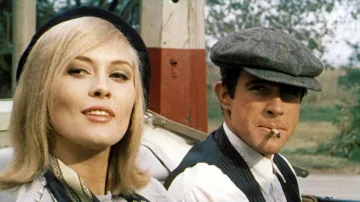
This here’s Miss Bonnie Parker. I’m Clyde Barrow. We rob banks.
In the early days of cinema there were no real restrictions. Some filmmakers pushed the envelope of tastefulness a little too far, resulting in the Motion Picture Production Code, which dictated moral standards in film from 1930 to the late 60s. Ask someone today to describe an “old-fashioned” movie, and they’ll probably end up describing this code. By the late 60s, enforcing the code became too cumbersome, so the MPAA began rolling out movie ratings to replace it—granting filmmakers many new freedoms that had not been available for almost 40 years. Films quickly came out that exercised this new freedom, but the first film to really use that freedom artfully was Bonnie and Clyde. Directed by Arthur Penn (Night Moves, Little Big Man) and starring Faye Dunaway and Warren Beatty, this movie shocked audiences with graphic violence and discussion of sexuality. It’s rather tame by today’s standards, but when it came out, there had never been another movie like it.
The plot is based on the real-life criminal duo Bonnie Parker and Clyde Barrow, who went on a bank-robbing spree across the Midwest for a few years. Bonnie is an intelligent young waitress in a small town looking for a ticket out. She meets criminal Clyde, just out of prison, and quickly attaches herself to him and his exciting lifestyle. When Clyde’s crooked past and Bonnie’s yearning for a more exciting life come together, they get a gang together and start robbing banks. They quickly become folk heroes as well as outlaws, sending pictures and poems to newspapers to publish. The law is less sympathetic and puts more and more effort into catching them as they get away time after time.
You go home and sit in your room and think, “When and how will I ever get away from this?” And now you know.
The story is deep and compelling and the performances are great (each member of the gang got nominated for an academy award that year). But the best part of the movie is without a doubt Faye Dunaway’s performance as Bonnie Parker. Bonnie is a small-town girl with much larger aspirations—she wants to get out and be this famous, larger-than-life anti-hero that everyone adores. Sending photos and poems to the newspapers is all her doing, and we see her light up when an opportunity to be famous presents itself. She quickly realizes that most members of the gang are simply in it for the money, which frustrates her intellectual aspirations and provides a deeper level of conflict in the movie. She’s a complex, sympathetic, and tragic character, and Dunaway does an amazing job bringing all of this to life.
The real-life Bonnie and Clyde were hated by law enforcement, but loved by pretty much everyone else. They truly were both famous and infamous. People disapproved of their actions, of course, but always jumped at the chance to read new stories about them. Remember, this film was probably the first major film to portray criminals in a sympathetic light, and it does this exceedingly well—I loved Bonnie and Clyde, and seeing them escape justice never failed to bring a smile to my face. I admittedly haven’t done enough research to know how much of the film actually happened, but if the real-life duo was even half as charming as they were in the film, I can see how they became so famous so quickly.
Should I Watch Bonnie and Clyde?
Bonnie and Clyde is both a great classic film and a fun little piece of cinema history. In many ways, this is the movie that ushered in the modern era of filmmaking. The sympathetic anti-hero is very common now, but it was this film that showed that that formula could not only sell, but tell a great story as well. The movie is rated R and is probably too much for most kids, but older teens and adults will probably love it. Whether you’re a Bonnie and Clyde historian or don’t know anything about them, this movie will make a fan out of you.
Movies Like Bonnie and Clyde
- Badlands (1973) - Bonnie and Clyde romanticizes the criminals it follows, making them charming, cool, and sexy. Badlands shows the cruel reality of a similar set of criminals, existing in a dream-like fairytale so that neither character is fully aware of the truth of their situation. It’s a little light on substance and character growth, but it’s a nice companion to Bonnie and Clyde, showing what their lives would actually be like.
- True Romance (1993) - Written (but not directed) by Tarantino, this tale of lovers on the run is loaded with 90s style, memorable dialogue, and acting talent. There are some issues with pacing, but the film remains a stylish and snappy crime film.
- Thelma and Louise (1991) - The story of Thelma and Louise starts off much differently than Bonnie and Clyde, but quickly turns into something similar: two people eager to leave everything behind and live for themselves, running from the law. Equal parts road trip, girls night, and crime spree, there’s a lot to love in this 90s classic.
Academy Awards
Winner: Best Supporting Actress (Estelle Parsons)
Nominee: Best Picture, Best Director (Arthur Penn), Best Screenplay, Best Actor (Warren Beatty), Best Actress (Faye Dunaway), Best Supporting Actor (Gene Hackman), Best Cinematography, Best Costume Design
- Runtime: 1:52
- Director: Arthur Penn
- Year: 1967
- Genres: crime
- Rating: R

About Brandon
My name is Brandon, and I love movies. Not bad ones, though—just the good ones. I’m curating and reviewing a list of classic, essential-viewing, or just plain good movies from all decades, and I've been reviewing them since 2016. I also co-host Peculiar Picture Show, a podcast about movies and mental health and write about Dungeons & Dragons options, builds, and optimization.
More in 1960s
Butch Cassidy and the Sundance Kid: Sunset on the Classic Western
1969
biopic, western
Rosemary's Baby: Gaslighting Its Way Into Cinema History
1968
horror, thriller
A Fistful of Dollars: The Italian Film That Reinvented the Western
1964
western
More in crime
The Sting: A Funny, Nostalgic Crime Caper
1973
comedy, crime, drama
Scarface: A Truly Excessive Crime Film
1983
crime
Serpico: Gritty Police-vs-Police Drama
1973
biopic, crime, drama