Ex Machina: A Sci-Fi Film That Passes the Turing Test
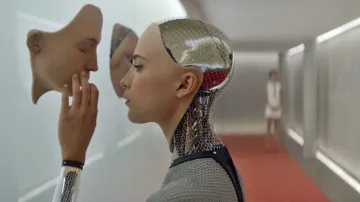
Do you have someone who switches you off if you don’t perform as you should? … Then why should I?
If you mixed together Mary Shelley’s novel Frankenstein with the 1982 film Blade Runner, you might get something kind of like Ex Machina. Written and directed by Alex Garland (his first effort as a director, writer of 28 Days Later and Annihilation) and starring Alicia Vikander, Domhnall Gleeson, and Oscar Isaac, this philosophical film is one of the best I’ve seen on artificial intelligence. In true sci-fi fashion, this film is not content to simply explain what AI is—it also asks what it means. But it’s also not content to be a boring discussion of ethics. This is a thriller just as much as it is a philosophical film, and I found it gripping.
The film opens with young programmer Caleb winning a contest to spend a week with enigmatic tech giant Nathan at his private estate. Upon arriving, Caleb discovers that he won’t merely be hanging out with Nathan—he’ll be evaluating his new artificial intelligence, Ava, as an impartial observer. Ava is far more intelligent and emotional than any system Caleb’s ever seen, and he soon begins to suspect that there’s more going on at the estate than he realizes. As he begins to unravel that mystery, both Nathan and Ava increasingly ask for his loyalty, forcing him to make some difficult decisions.
I know what the Turing Test is. It’s when a human interacts with a computer, and if the human doesn’t know they’re interacting with a computer, the test is passed.
Other films have tackled artificial intelligence before, including 2001: A Space Odyssey in 1968 and the brilliant Blade Runner in 1982, but few have gone as deep as Ex Machina. The 2001 film AI spent a lot of time on this, but that film was primarily emotional. Ex Machina is a thinking film, and it very succinctly poses the questions that should be asked about true artificial intelligence. It doesn’t try to prescribe answers or preach at us—it merely asks us to think, and shows us how complex these issues can be. This film is morally ambiguous from start to finish, and simple questions of good and evil are not asked here. Does an AI deserve the same freedoms as a human? And at what cost? These questions don’t have easy answers, but the film does an excellent job of getting us to ponder them.
This is as much thriller as science-fiction. Almost immediately upon Caleb’s arrival at Nathan’s estate, there’s some underlying tension and a real sense of danger. Something just seems off, but it’s difficult to know what’s off. That tension and vague dread build steadily throughout the film into an intense finale. It’s a game with three players. Alliances are made and broken, and power passes between the players quite often. We see things through the eyes of Caleb, but both Nathan and Ava have some tricks up their sleeve as well. This is one of those rare films where I had no idea how it was going to end. Not that the ending was shocking, but it certainly wasn’t predictable.
Should I Watch Ex Machina?
Ex Machina bridges a gap between two genres that don’t often interact: philosophical science-fiction and tense thriller. It’s not the masterpiece that Blade Runner was, but it asks more pointed questions and spends more time exploring them. As Garland’s first directing effort, there are a few missteps—there are dramatic pauses that linger too long and conversations that feel forced. But overall, this is a great film that will make you think and hold your attention throughout. If you’re a fan of science-fiction, I highly recommend this film.
Movies Like Ex Machina
- AI – If Ex Machina is the philosophical discussion of artificial intelligence, AI is the emotional discussion. This gets in pretty deep with the ethics of artificial intelligence, but in a way that tugs at the heartstrings and brings up issues that would be wildly out of place in Ex Machina.
- Blade Runner – Asks a lot of the same questions as Ex Machina, but there’s a much bigger mystery with some action wrapping all those ideas up. This is one of the classics of the sci-fi genre and laid the groundwork for a lot of the discussion in Ex Machina and it’s essential viewing if you’re interested in movies that discuss AI.
- Primer – Not a discussion of artificial intelligence, but deals with time travel with intelligence on par with Ex Machina. This is one that probably requires an explanation in order to understand, and it deals with the intricacies of time travel in a way I’d not seen before.
Academy Awards
Winner: Best Visual Effects
Nominee: Best Original Screenplay
- Runtime: 1:48
- Director: Alex Garland
- Year: 2014
- Genres: mystery, sci-fi, thriller
- Rating: PG

About Brandon
My name is Brandon, and I love movies. Not bad ones, though—just the good ones. I’m curating and reviewing a list of classic, essential-viewing, or just plain good movies from all decades, and I've been reviewing them since 2016. I also co-host Peculiar Picture Show, a podcast about movies and mental health and write about Dungeons & Dragons options, builds, and optimization.
More in 2010s

Lady Bird: The Essential Millennial Coming-of-Age Story
2017
comedy, drama, indie, teen

Marriage Story: A Masterful, Heartbreaking Portrait of Divorce
2019
comedy, drama, indie

American Hustle: Style, Scams, and Stellar Performances
2013
crime, drama, indie
More in mystery

Psycho: A Horror Classic That Holds Up Well Today
1960
horror, mystery

Murder on the Orient Express: A Classic Murder Mystery on a Train
1974
mystery

The Usual Suspects: A Mystery Well Worth Solving
1995
crime, indie, mystery
More in sci-fi

The Girl Who Leapt Through Time: A Story of Fate and Love
2006
animated, drama, romance, sci-fi, teen
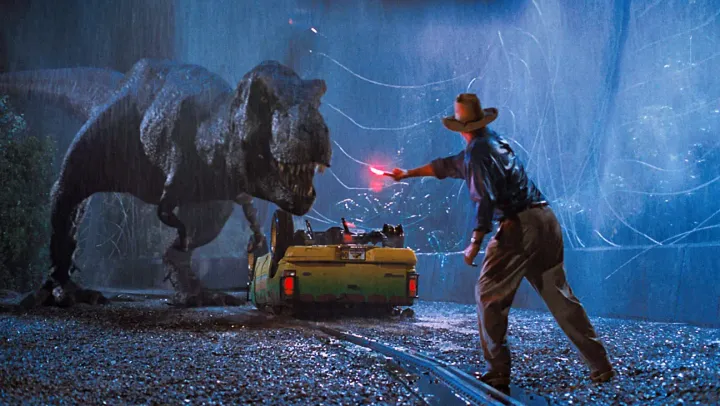
Jurassic Park: The Best Dinosaur Movie of All Time
1993
sci-fi, thriller
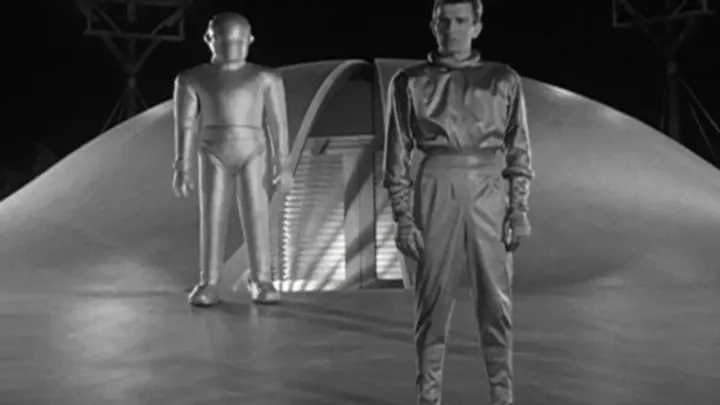
The Day the Earth Stood Still: The Sci-Fi Warning for Post-War America
1951
sci-fi
More in thriller
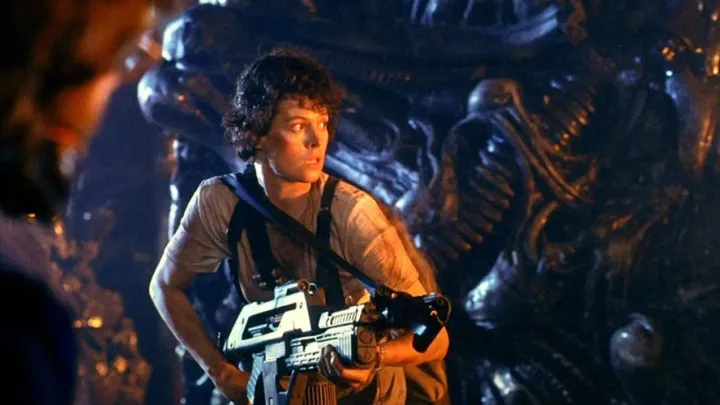
1986
action, sci-fi, thriller

Mulholland Drive: A Complex (and Confusing) Mind Trip
2001
drama, mystery, thriller

Parasite: Class Warfare and Inequality in South Korea
2019
drama, thriller