Forbidden Planet: The Sci-Fi Classic That Inspired for Decades
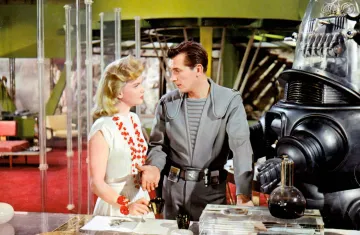
Welcome to Altair IV, gentlemen. I am to transport you to the residence. If you do not speak English, I am at your disposal with 187 other languages along with their various dialects and sub-tongues.
Old, classic sci-fi films bring some very specific images to mind, and Forbidden Planet has all of them in spades. Directed by Fred M. Wilcox (I Passed for White, Three Daring Daughters) and starring Walter Pidgeon, Anne Francis, and Leslie Nielsen (back before he was a comedic actor!), this film has flying saucers, clunky robots, strange monsters, alien worlds, and advanced technology—everything you’d expect from a classic sci-fi. I initially sat down to watch this for a bit of classic, campy fun, but the point it eventually makes is deep and thought-provoking, and I think even more relevant today than when it was released in 1956. The old sci-fi mechanisms and tropes may seem a bit goofy to today’s audiences, but the message and entertainment factor still have a lot to offer.
The plot is loosely adapted from a Shakespeare play: The Tempest. Commander Adams leads a team of space explorers to investigate a previous crew that had gone silent on an alien world 20 years ago. When they land, they find that only two members of the original crew survived: Dr. Morbius and his daughter Altaira. The others had been wiped out by an unknown force, which Morbius and Altaira are mysteriously immune to. Morbius is using technology more advanced than anything Adams has seen before, and things just don’t seem to add up. But when the mysterious creature that wiped out Morbius’s crewmates returns and starts attacking Adams’s crew, they must uncover what happened—or risk annihilation.
My poor Krell. After a million years of shining sanity, they could hardly have understood what power was destroying them.
The sci-fi stereotypes in Forbidden Planet may seem laughable today, but they were revolutionary when the film came out. Echoes of the film’s art direction can be seen in Star Trek, and creator Gene Roddenberry has said that this film was a major inspiration for the original series. Robert Kinoshita, who is credited with building Robbie the Robot, went on to become the art director for the show Lost in Space. This wasn’t just a great sci-fi film—it set the standard for all sci-fi films to follow it, much in the same way that Star Wars did two decades later. It was the first sci-fi film to be given a large budget, and its commercial success paved the way for other major science fiction films in years to come. Even with the clunky robots and flying saucers, this holds up surprisingly well today.
Forbidden Planet had a great plot and style, but it wouldn’t be a great sci-fi film without an interesting message, and it really delivers on that front. Without giving too much away, the basic message is that no matter how technologically advanced we become, our technology will always be as evil as we are. Books are being written now about how our unconscious biases are causing new technologies to hurt people, and I can’t help but feel that this film warned about this exact problem over 60 years ago. History repeats itself, and just like old classics like Metropolis are once again relevant, the message implied in Forbidden Planet is still one that needs to be taken very seriously today.
Alright, all that heady morality stuff is great, but is this fun to watch? Yes, very much so! In fact, the message and philosophy of the film aren’t really focused on until the end, so this film drew me in based on its entertainment value alone. Even before Adams and his crew land on the planet, there’s a real sense of danger and menace, and it only gets worse after they land. I wouldn’t describe this as an action movie by any stretch, but there are a few well-done battles that are pretty exciting. There’s also some good humor thrown in as the straight-laced Commander Adams tries to keep his crew in line when they meet an attractive woman after over a year in hyperspace. This film was beloved by audiences and critics alike, and it’s easy to see why.
Should I Watch Forbidden Planet?
Forbidden Planet may just be the best classic science fiction film of all time, and remains one of the genre’s enduring classics. It’s both entertaining and relevant today, and that’s no small feat for a sci-fi film that came out over 60 years ago. Come for the clunky robots and flying saucers, stay for the deep questions about human nature and technology—this film is a blast.
Movies Like Forbidden Planet
- Star Trek - I know this is a movie website, but the entire Star Trek franchise is inspired heavily by Forbidden Planet, and serves as a great follow-up. There’s a plethora of movies and shows to choose from, but the mix of science, philosophy, and social commentary is very similar.
- The Time Machine (1960) - This classic sci-fi film is one of the most philosphically ambitious of its time. Like Forbidden Planet, it shows what happens if humanity is left unchecked, having access to scientific discoveries without moral boundaries. Rather than an alien planet, it shows a Victorian inventor who travels into the far future to see what mankind has become. A great watch if you like philosophical sci-fi that comments on morality as well as technology.
- The Day the Earth Stood Still (1951) - Another classic sci-fi film that comments on humanity’s destructive nature, The Day the Earth Stood Still brings us more of the same visual style: flying saucers, clunky robots, and oldschool special effects. It’s a little slower than Forbidden Planet (and that’s saying something), but worth a watch.
Academy Awards
Nominee: Best Special Effects
- Runtime: 1:38
- Director: Fred M. Wilcox
- Year: 1956
- Genres: sci-fi
- Rating: G

About Brandon
My name is Brandon, and I love movies. Not bad ones, though—just the good ones. I’m curating and reviewing a list of classic, essential-viewing, or just plain good movies from all decades, and I've been reviewing them since 2016. I also co-host Peculiar Picture Show, a podcast about movies and mental health and write about Dungeons & Dragons options, builds, and optimization.
More in 1950s
All About Eve: Bette Davis Brings Classic Hollywood to Life
1950
drama
High Noon: A Western About Duty, Not Gunfights
1952
drama, western
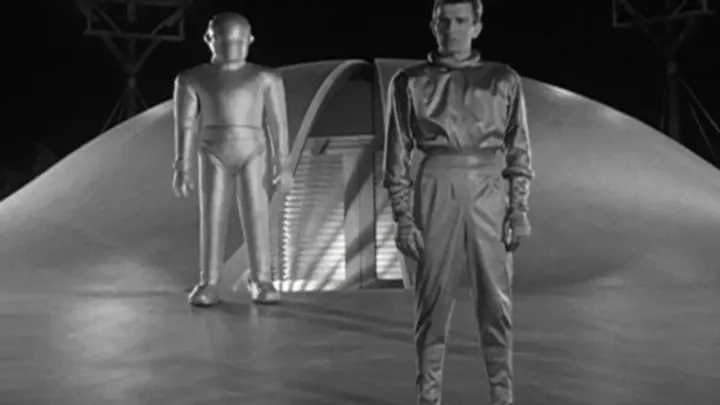
The Day the Earth Stood Still: The Sci-Fi Warning for Post-War America
1951
sci-fi
More in sci-fi
Ex Machina: A Sci-Fi Film That Passes the Turing Test
2014
mystery, sci-fi, thriller
Her: You'll Believe a Man Can Love His Phone's Operating System
2013
drama, indie, romance, sci-fi
Back to the Future: Time Travel and Timeless Fun
1985
adventure, sci-fi