Gone With the Wind: The Original Epic Wartime Romance Film
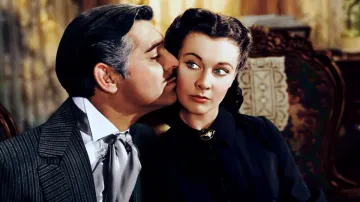
If I said I was madly in love with you, you’d know I was lying.
Gone with the Wind is a film that almost needs no introduction. Directed by Victor Fleming (The Wizard of Oz), who took over after George Cukor (My Fair Lady, The Philadelphia Story) was let go, this four-hour epic is widely heralded as one of the best films of all time, and, when adjusted by inflation, it’s the highest-grossing film of all time by a very wide margin—over seven billion dollars in 2018’s money. But I’ll be honest: I didn’t really understand much about it until I watched it today. I’d heard it was a romance, but that’s only partly true; it’s also about the disintegration of the old South and its culture in the aftermath of the American Civil War. And it’s told from the perspective of the Confederacy, showing an interesting, if somewhat misleading, perspective. The idea of a four-hour romance movie initially didn’t interest me, but this film is every bit as epic as it is romantic—which is to say a lot. The scope is grand, the characters are deep, and the conflict is much bigger than one relationship. I’m a little late coming to the party of reviewing this film, but I think this still holds up pretty well today. It really is that good.
The plot follows Scarlett O’Hara, a young, wealthy Southern belle living on a plantation in the deep South just as the Civil War is breaking out. Scarlett is initially immature and very manipulative and has the hearts of most men in town, but desires Ashley Wilkerson, a man engaged to his cousin (because that’s how things are done in the South). In trying to woo Ashley, she catches the eye of the roguish Rhett Butler, a man interested primarily in personal gain. When the war breaks out and ends up being more destructive than any of the Southerners had imagined, things drastically change for Scarlett and her family. Rhett pursues her romantically, and she eventually comes to love him too. But these two deeply flawed characters struggle in the crumbling South after the war, which creates tension on all fronts.
You’re like the thief who isn’t the least bit sorry he stole, but is terribly, terribly sorry he’s going to jail.
There are some aspects of Gone with the Wind that have not aged well. The film whitewashed slavery and suggested that the Civil War was fought over manners. There are some racist portrayals of black people, although Hattie McDaniel became the first black person to be nominated for—and win—an Academy Award. That said, there are many things that are done extremely well in the film. What I found most compelling were the characters of Rhett Butler and Scarlett O’Hara. Neither is very likable, although they are fascinating both in their complexity and the growth they show throughout the film. The film is four hours long and the story spans 12 years, so we get to see much more of the lead characters than we do in most other films, and that time is not wasted. It’s fascinating seeing Scarlett grow from an immature teenager chasing after boys to a hardened woman willing to do whatever it takes to succeed in the broken South, and seeing Rhett grow from a man who is decidedly not a gentleman into a man who is almost a gentleman and truly wants to be a better man. Modern films could learn a lot by studying how these two characters are portrayed and play out their stories in a film that’s almost 80 years old.
This film is unabashedly melodramatic—that’s just the style. Scarlett and Rhett are intentionally a little larger than life, which is a carry-over from stage acting. Cinema hadn’t really found its stride yet. That doesn’t stop the tension and drama in this film from feeling real and even relatable. The film presents a caricature of its story, exaggerating a few things here and there, but this is never done without purpose. Every exaggerated act or line is done to drive home what the characters are really feeling. The film’s style is different from what we typically see today, but it works well and improves the story in most places.
Should I Watch Gone With the Wind?
Gone with the Wind is a masterpiece classic film that should be watched and often, by someone who enjoys films. (See what I did there? That’s a quote.) I was initially worried I wouldn’t like it—so much so that I put off watching it for over a year after I put together this list. But I ended up loving the film. I’ll admit, it can be a little slow by today’s standards, so I don’t know that everybody today would enjoy this, but patience will be rewarded greatly for viewers today who want to see one of the most intricate films of all time.
Movies Like Gone With the Wind
- Doctor Zhivago (1965) - These two films have a lot in common. Both are epic historical romances set during a war, and both mourn the loss of an era. Doctor Zhivago takes place in Russia during World War I, and then the Russian Revolution. The style is more authentic than melodramatic, due to a more mature filmmaking industry, but the history, romance, and nostalgia are very similar.
- Wuthering Heights (1939) - Released the same year as Gone With the Wind (and remade several times), Wuthering Heights is a gothic romance with a more fairy-tale feel to it. Gone With the Wind gives us love struggling to survive in the face of overwhelming odds, but Wuthering Heights gives us a love so strong that nothing—not class divides or life itself—can stop it. If you want another classic romance to watch, this is a great one.
- The English Patient (1996) - Both The English Patient and Gone With the Wind are epic romances set during wartime. Rather than a story of love struggling to survive, this is a mournful story of love lost, but at least remembered. Scarlett moves on by forgetting, but Almásy endures by remembering. The protagonists for both films are flawed, but strong, and their love stories are a fascinating watch.
Academy Awards
Winner: Best Picture, Best Actress (Vivien Leigh), Best Supporting Actress (Hattie McDaniel), Best Director, Best Screenplay, Best Cinematography, Best Art Direction, Best Film Editing
Nominee: Best Actor, Best Supporting Actress (Olivia de Havilland), Best Sound, Best Effects - Special Effects, Best Music - Original Score
- Runtime: 3:58
- Director: Victor Fleming, George Cukor
- Year: 1939
- Genres: drama, epic, historical, romance
- Rating: G

About Brandon
My name is Brandon, and I love movies. Not bad ones, though—just the good ones. I’m curating and reviewing a list of classic, essential-viewing, or just plain good movies from all decades, and I've been reviewing them since 2016. I also co-host Peculiar Picture Show, a podcast about movies and mental health and write about Dungeons & Dragons options, builds, and optimization.
More in Victor Fleming
The Wizard of Oz: The Film That Put Kansas On the Map
1939
adventure, fantasy, musical
More in George Cukor
The Philadelphia Story: Humanizing a Woman’s Drive for Perfection
1940
comedy, drama, romance
More in 1930s
The Wizard of Oz: The Film That Put Kansas On the Map
1939
adventure, fantasy, musical
Bringing Up Baby: A Leopard in the Limelight
1938
comedy, romance
More in drama
Say Anything: Gen-X Tells Previous Gens What They Think
1989
comedy, drama, romance, teen
A Star is Born: The Best Remake of This Film Yet
2018
drama, music, romance
I, Tonya: Breaking the Knees of Boring Biopics
2017
biopic, comedy, drama, indie
More in epic
Ben-Hur: Faith, Redemption, and an Epic Chariot Chase
1959
adventure, epic, historical

Once Upon a Time in America: A Sprawling American Immigrant Story
1984
crime, drama, epic

It’s a Mad Mad Mad Mad World: The Godfather of Comedy
1963
adventure, comedy, epic
More in historical
Ben-Hur: Faith, Redemption, and an Epic Chariot Chase
1959
adventure, epic, historical
Lawrence of Arabia: The Big, Epic War Film Everyone Should See
1962
biopic, epic, historical, war
Marie Antoinette: An Emotionally Rich Look at a Relatable Historical Queen
2006
biopic, drama, historical, indie
More in romance
Your Name: A Refreshingly Complex Teenage Romance
2016
animated, romance, teen
Say Anything: Gen-X Tells Previous Gens What They Think
1989
comedy, drama, romance, teen
Bringing Up Baby: A Leopard in the Limelight
1938
comedy, romance