Lost in Translation: The Search to be Found
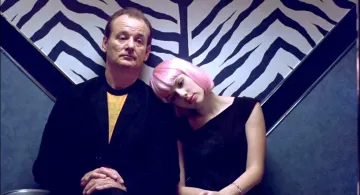
Let's never come here again, because it would never be as much fun.
Lost in Translation is my favorite movie. It’s emotional rather than intellectual, but it’s emotional in a way that makes you think. To explain what this movie means to me, I have to explain another piece of art: the absurdist play Waiting for Godot by Samuel Beckett. Two characters, Vladimir and Estragon, wait every day for the mysterious Godot to come for them. Both are unhappy with their lives, and they wait for Godot to make their lives better in ways they can’t describe. They don’t know what he will do or even if he knows who they are, but they hope their lives will be better with him. They spend their days hoping for a man and a change that never comes, stuck in limbo because they can’t move on.
Lost in Translation is more optimistic than Waiting for Godot, but the similarities are clear. Two characters want to connect with others, but can’t, for various reasons. They’re lost and waiting for some unknown force to come in and make their lives better, even though they don’t know what “better” looks like. Instead of finding their Godot, they find each other. As they search for connection, they’re not found, but they find that they’re lost together. That doesn’t whisk them away to make their lives better, but it’s enough to make them both a little less lonely.
The plot follows an aging man named Bob, an actor who played a spy character back in the 70s, as he travels to Tokyo to film a whiskey commercial. There, he meets Charlotte, a 25-year-old aimless college graduate who came to Tokyo with her husband, who is shooting a music video. They both yearn for connection—not love, just human connection—and fail to find it with the people around them. They find each other and spend a few days together in Tokyo, commiserating about their loneliness. Honestly, the plot is not very important to the film—the plot, like the setting, exists to show us these two humans looking for connection.
I just feel so alone, even when I'm surrounded by other people.
With Bob being so much older than Charlotte (55 and 25), they have different outlooks on connection. We see Charlotte try to reach out to others, hoping they can ease her loneliness, but she gets disappointed when others miss her. Bob actively avoids conversations because he knows they won’t lead to a genuine connection. Between the two of them, we see that the problem has never been better, and it will never get easier. The film doesn’t offer a solution; it just shows these two characters going through life.
Lost in Translation is a film about complex feelings—feelings that you can’t describe, but know instantly. Coppola does a fantastic job not just of showing us what these characters are feeling, but getting us to feel the same way. You feel lonely watching these characters walk through crowded streets full of people who can’t understand them, and you feel a little less lonely watching them connect. In most scenes, actors don’t talk to the camera; viewers watch like bystanders rather than moviegoers. This adds to the feeling of isolation, and the few scenes where the characters connect with the audience hit harder.
Should I Watch Lost in Translation?
So, is Lost in Translation a film for everyone? Well, no. The abstract plot and style can be hard to follow, and many intelligent people simply want to be entertained by films. For those people, the film can be a disappointment. Lost in Translation wasn’t a film that made me happy, but it also didn’t make me sad. It felt like the characters and I had connected at a crowded party and were in on a private conversation that no one else knew about. If that sounds interesting, you’ll probably enjoy it.
Movies Like Lost in Translation
- Her (2013) - Made by Copolla’s ex, Spike Jonze (who was reportedly the inspiration for Charlotte’s husband), Her shows us what human connection means by showing a man falling in love with an artificial intelligence. Despite the odd premise, the tone and style are very similar to Lost in Translation.
- In the Mood for Love (2000) - In this Chinese film, two neighbors grow to be friends, but soon discover that their spouses are having an affair. They confide in each other, but are determined not to let their friendship turn to love. Like Lost in Translation, there’s a deep but restrained connection between the two, and loneliness is a central theme.
- Before Sunrise (1995) - A brief encounter between a man and woman on a train leads them to spend a night together, connecting, but knowing they will only have that one night. This isn’t about loneliness so much as discovery, but the theme of surprising connection means fans of one will probably enjoy the other.
Academy Awards
Winner: Best Writing, Original Screenplay (Sofia Coppola)
Nominee: Best Picture (Ross Katz, Sofia Coppola), Best Actor in a Leading Role (Bill Murray), Best Director (Sofia Coppola)
- Runtime: 1:42
- Director: Sofia Coppola
- Year: 2003
- Genres: drama, indie
- Rating: R

About Brandon
My name is Brandon, and I love movies. Not bad ones, though—just the good ones. I’m curating and reviewing a list of classic, essential-viewing, or just plain good movies from all decades, and I've been reviewing them since 2016. I also co-host Peculiar Picture Show, a podcast about movies and mental health and write about Dungeons & Dragons options, builds, and optimization.
More in Sofia Coppola

Marie Antoinette: An Emotionally Rich Look at a Relatable Historical Queen
2006
biopic, drama, historical, indie
More in 2000s

Gladiator: An Epic Political Revenge Tale
2000
action, epic, historical

The Dark Knight: A Dark Hero, a Brilliant Villain
2008
action, superhero
Sideways: You'll Never Order Merlot Again
2004
comedy, drama, indie
More in drama
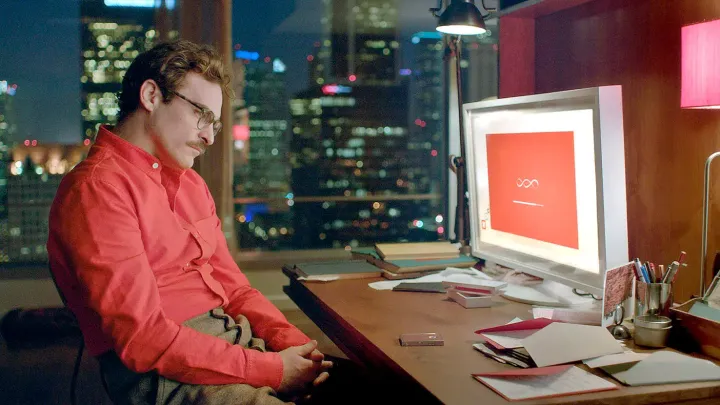
Her: You'll Believe a Man Can Love His Phone's Operating System
2013
drama, indie, romance, sci-fi
Colossal: A Clever Metaphor for Power, Abuse, and Recovery
1916
comedy, drama, indie
Parasite: Class Warfare and Inequality in South Korea
2019
drama, thriller
More in indie

Donnie Darko: A Mind-Bending Portrait of Mental Illness
2001
indie, sci-fi, teen
Juno: A Quirky Teen Comedy About Teenage Pregnancy
2007
comedy, indie, teen

500 Days of Summer: Turning Romance Upside Down
2009
comedy, indie, romance