Mean Streets: Gritty Realism in the Criminal World of New York
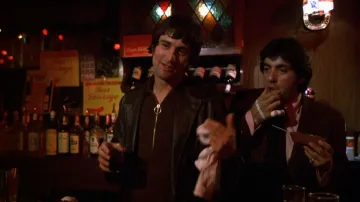
You don’t make up for your sins in church. You do it in the streets. You do it at home. The rest is bullshit and you know it.
With the newfound freedom afforded by loosened censorship laws, the 70s were a Renaissance of crime films. In 1972, The Godfather made a crime family as familiar as your next-door neighbors. In 1973, Martin Scorsese (Goodfellas, Taxi Driver) released Mean Streets, which brought crime from a family affair back to the streets, where it was untamed, unsafe, and unpredictable. Starring Harvey Keitel and Robert De Niro, this film had a brilliant script, strong performances by lead actors, and some innovative cinematography that made the film seem more real than many of the earlier crime films, as well as many modern ones. This is admittedly not the best work in Scorsese’s stellar career, but it was his first masterpiece, and it holds a place in crime film history, paving the way for many later brilliant films.
The plot follows two friends: Charlie, a young man working to collect debts for his criminal uncle, and Johnny Boy, a loose cannon whose hubris and violent nature constantly place him and his friends in danger. Despite his criminal ties to both his uncle and best friend, Charlie wants a somewhat respectable life. This is made much harder by Johnny Boy’s behavior, especially as Charlie finds himself falling for Teresa, Johnny Boy’s cousin. As Charlie struggles to make a name for himself while holding together his own life and that of his friend, he discovers first-hand how dangerous this criminal underworld can be.
You know what the Queen said? If I had balls, I’d be King.
Mean Streets isn’t Scorsese’s first film, but it’s the first where he drew on his experiences growing up in the Little Italy neighborhood of New York City. In fact, the character Johnny Boy is based on Scorsese’s uncle. It’s this grounding in reality that made this film Scorsese’s first hit. Many of the scenes don’t feel scripted; it feels like you’re just watching a regular conversation play out. It took me a while to recognize the plot, which was already well-formed by the time I saw it, but it revealed itself in seemingly random conversations—it really sneaks up on you. The fight scenes are realistically clumsy as fighters try to hurt each other while also trying to protect the suits they’re wearing. It’s not a film about a criminal family performing criminal acts; it’s a film about just trying to live life while everyone around you is performing criminal acts. It’s clear that Charlie doesn’t want to be there—he has no romanticized notions of crime—but he also has no way out. The Godfather was a brilliant film, but it didn’t reflect the harsh reality of those surrounded by real criminals; Mean Streets does.
The cinematography was innovative for its time. Several long shots were filmed with a small hand-held camera, including the long bar fight shot and the scene where Charlie is drunk, in which the camera was weighted and strapped to him as he stumbled around. Imperfect long shots have since caught on and are pretty typical today, but they were pretty novel in 1973. Now, that said, it wasn’t an innovative spirit that led Scorsese to film this way; it was the film’s meager budget. Half of the film’s budget was blown on one of Scorsese’s other innovations: the use of modern music in film. The film has an excellent soundtrack, but most films of the time were using scores.
Much like The Godfather, Mean Streets gives us a criminal-next-door vibe, showing us relatable characters surviving in a life of crime. Unlike The Godfather, though, this criminal world is not glorified. In most crime films, a character like Charlie would reluctantly accept the crime world, but then go on to do well. A character like Johnny Boy, with his devil-may-care attitude and wild temperament, would probably do quite well for himself too. Instead, we see reluctance in Charlie through the whole film, and we constantly see Johnny Boy in danger. It’s fascinating, but also very tense, as you know these characters are teetering on the edge of danger.
Should I Watch Mean Streets?
Mean Streets was a seminal work, albeit not quite so much as The Godfather. It’s an esoteric film. The plot seems to happen without drawing much attention to itself, which may be hard to follow for some who expect the whole plot to be spelled out for them. Many scenes feel improvisational, making this feel like a window into someone else’s reality rather than a tightly-planned story, although it is tightly-scripted. If you’re in the mood for a smart crime film that shows the bad as well as the good—or if you’re a Scorsese fan in general—give this one a try.
Movies Like Mean Streets
- Taxi Driver (1976) - Scorsese made Taxi Driver just three years after Mean Streets, but his talent as a filmmaker had grown, making Taxi Driver a more mature and focused story of a man teetering on the edge of the criminal world. Although PTSD was not formally classified until 1980, Taxi Driver is one of the best portraits of a man with PTSD that’s ever been filmed.
- Goodfellas (1990) - Goodfellas is one of the best crime films ever made, and one of Scorsese’s best films—and that’s saying a lot, considering how many good films are in each of those groups. Like Mean Streets, it shows the little guys at the bottom rather than the crime bosses at the top. The scope is much larger, showing the most of the life of real-life criminal Henry Hill. The raw grittiness isn’t as present, but this is an outstanding crime film.
- Carlito’s Way (1993) - This is another story of a man trying—and failing—to escape the criminal world. Brian de Palma’s style is more brutal and violent than Scorsese’s, but the story beats are similar: a criminal wants to go straight, but loyalty to the wrong people pulls him back in. Worth a watch for fans of Mean Streets.
- Runtime: 1:52
- Director: Martin Scorsese
- Year: 1973
- Genres: crime, indie
- Rating: R

About Brandon
My name is Brandon, and I love movies. Not bad ones, though—just the good ones. I’m curating and reviewing a list of classic, essential-viewing, or just plain good movies from all decades, and I've been reviewing them since 2016. I also co-host Peculiar Picture Show, a podcast about movies and mental health and write about Dungeons & Dragons options, builds, and optimization.
More in Martin Scorsese
Goodfellas: The Most Watchable Crime Film
1990
biopic, crime
The Departed: The Best Game of Cat and Mouse in Cinema
2006
crime
Gangs of New York: America's Brutal Historical Gang Wars
2002
crime, drama, historical
More in 1970s
Dog Day Afternoon: One Non-Sequitur After Another
1975
crime, drama, LGBTQ
The Rocky Horror Picture Show: A Celebration of Any Sexual Preference
1975
comedy, indie, LGBTQ, musical
Apocalypse Now: War, Madness, and Moral Chaos
1979
drama, war
More in crime
A Fish Called Wanda: Never Has There Been a Funnier Heist
1988
comedy, crime
The Sting: A Funny, Nostalgic Crime Caper
1973
comedy, crime, drama
The Usual Suspects: A Mystery Well Worth Solving
1995
crime, indie, mystery
More in indie

Eternal Sunshine of the Spotless Mind: A Bittersweet Look at Love and Mental Illness
2004
drama, indie, romance
American Hustle: Style, Scams, and Stellar Performances
2013
crime, drama, indie
Little Miss Sunshine: Showing the Beauty of Imperfection
2006
comedy, drama, indie, LGBTQ