Primer: The Human Cost of Time Travel
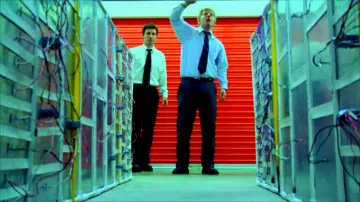
I can imagine no way in which this thing could be considered anywhere remotely close to safe.
Primer is a small indie film few have heard of, but it’s become a cult classic for fans of the sci-fi genre. Its implementation of time travel is unique and makes for an interesting, if uneven, story. Don’t expect big-budget polish or filmmaking, but if want a little puzzle to think about, Primer can be a fun watch.
That line above about their time travel machine being unsafe perfectly captures the essence of Primer: cerebral, understated, and deeply unsettling in its realism. Written, directed, scored by, and also starring Shane Carruth, this low-budget indie film (reportedly made for around $7,000—most of which went to film stock) approaches time travel more like a documentary than a film. Instead of flashy visual effects or slow-motion sequences, Primer grounds its science fiction in garage-level experimentation, with tension building as intellect exceeds wisdom.
The plot begins simply enough: two engineers stumble upon a means of limited time travel while developing a machine for something else. What begins as an innocent scientific curiosity soon spirals into an intricate web of ethical compromise. The film doesn’t explain its mechanics; it invites you to eavesdrop on two men piecing together a theory in real time. There’s no awkward exposition—just two scientists speaking in technical shorthand, leaving the audience to catch up if it can. Taking your eyes off the screen often means you’ll miss a key detail. Carruth’s writing assumes intelligence, and it rewards patience.
From this, they deduced that the problem was recursive; but, beyond that, found themselves admitting, against their own nature, and once again, that the answer was unknowable.
On first viewing, Primer seemed intentionally overcomplicated. After the credits rolled, I spent a good hour reading through online explanations before I felt confident I understood what I’d just seen. Even with that understanding, some parts still seemed deliberately ambiguous. That’s part of its brilliance—this isn’t a film about time travel as a gadget; it’s about what happens when human beings, full of pride and ready to rationalize their desires, gain the ability to manipulate their own past. It’s about control and the quiet corrosion of trust between friends who should know better.
Because of its shoestring budget, Primer is rough around the edges. Dialogue occasionally gets swallowed by ambient noise. Some shots drift slightly out of focus. There are no visual effects to speak of. But these imperfections give it a strange kind of authenticity, as though you’re watching something real: two people discovering something they were never meant to find. The lack of polish feels deliberate, driving home the film’s themes: intelligence without pretension, and accidental discovery.
That minimalism also serves one of the film’s greatest feats: its complexity. Carruth reportedly wrote the screenplay with flowcharts and timelines to keep the plot coherent, and yet the finished product never feels mechanical. It’s methodical, but human, rooted in emotion as much as intellect. More than the mechanics of time travel, the moral ambiguity that builds between the two leads becomes the true narrative. The question isn’t “how does it work?” but “what does it do to them—and to us?”
Four days after watching Primer, I’m still thinking about it. It’s one of those films that seems to expand the longer it lives in your head. You could watch it two or three times and still not catch every detail or implication. But that’s why the film is great. The movie trusts its audience to do the work, giving a level of engagement few big-budget science-fiction films even attempt. This is time travel for engineers, not dreamers—and yet, it’s one of the most quietly haunting sci-fi stories I’ve ever seen.
Should I Watch Primer?
If you love unraveling narrative puzzles, Primer will probably interest you. It’s not an easy film—it demands focus and maybe a post-viewing debrief—but the reward is worth it. Watch it with a group and prepare for a spirited discussion afterward; you’ll probably find that no two viewers have the same interpretation. If you prefer your science-fiction cleanly explained or emotionally guided, Primer may frustrate you. If you’re willing to dig into its loops and contradictions, you’ll find a film that treats you as an intelligent partner rather than a passive observer.
Movies Like Primer
- Coherence (2013) – Another low-budget, mind-bending indie that explores how ordinary people react when reality fractures around them.
- Timecrimes (2007) – A Spanish thriller that takes a more narrative-driven but equally unsettling approach to looping timelines.
- Upstream Color (2013) – Shane Carruth’s second film, even more abstract but thematically richer, expanding on his fascination with human connection and control.
- Runtime: 1:19
- Director: Shane Caruth
- Year: 2004
- Genres: sci-fi
- Rating: PG-13

About Brandon
My name is Brandon, and I love movies. Not bad ones, though—just the good ones. I’m curating and reviewing a list of classic, essential-viewing, or just plain good movies from all decades, and I've been reviewing them since 2016. I also co-host Peculiar Picture Show, a podcast about movies and mental health and write about Dungeons & Dragons options, builds, and optimization.
More in 2000s

Donnie Darko: A Mind-Bending Portrait of Mental Illness
2001
indie, sci-fi, teen
Gangs of New York: America's Brutal Historical Gang Wars
2002
crime, drama, historical

500 Days of Summer: Turning Romance Upside Down
2009
comedy, indie, romance
More in sci-fi
Her: You'll Believe a Man Can Love His Phone's Operating System
2013
drama, indie, romance, sci-fi

Alien: Thrills and Kills in Space
1979
horror, sci-fi, thriller

Invasion of the Body Snatchers: A Thriller Alien Invasion Film
1978
horror, sci-fi, thriller