Secretary: No Shades of Gray In This BDSM Movie
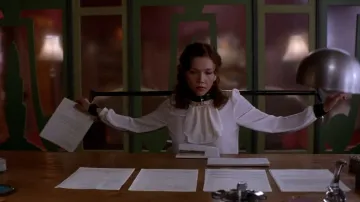
Who’s to say that love needs to be soft and gentle?
BDSM used to be a pretty taboo topic—until the godawful Fifty Shades of Grey exploited it as an artless debacle. But back in 2002, it was a pretty foreign topic in cinema, often used as a raunchy joke if it appeared at all. Secretary, directed by Steven Shainberg (Rupture, Hit Me) and starring Maggie Gyllenhaal and James Spader, could have been either a sermonizing condemnation of the subject matter or a gratuitous exploitation of it, but the way the movie respects its relationship elevates this from the drivel that usually surrounds the topic. With great writing and great performances from both leads, this is a fascinating portrait of how a real relationship with BDSM aspects could develop.
First, a disclaimer. While the portrayal of BDSM in Secretary is respectful and largely accurate, the story of a troubled woman falling in love with her boss is still deeply problematic. I don’t know that this film is trying to position that as a healthy relationship; the film shows its main character, Lee, moving from an unhealthy spot to a healthy spot, and part of that might be a transition from secretary to another job elsewhere as her relationship develops. The film does not address this, however, and that power dynamic remains unresolved—and in a movie about power dynamics in romantic relationships, that’s a tough sell. Be aware that, even by the end of the film, the relationship needs work to be healthy.
The movie opens with Lee Holloway, a young woman hospitalized for self-harming, being released from the institution and back into her family’s care. It’s clear that her self-harming ways are not behind her, as she still does it to alleviate stress. She gets her first job as a secretary for Mr. Grey, a young lawyer. Mr. Grey soon recognizes the signs of self-harm in Lee and sees in her a kindred spirit, and their work relationship evolves into something markedly less professional. All the while, Lee is trying to have some semblance of a normal relationship with her childhood friend and boyfriend Peter—which she finds very unfulfilling.
Why do you cut yourself, Lee? … Is it that, sometimes, the pain inside has to come to the surface, and when you see evidence of the pain inside, you finally know you’re really here? Then, when you watch the wound heal, it’s comforting. Isn’t it?
What makes Secretary really work as a movie are all of the little details that make the relationship and character development more believable. Mr. Grey isn’t some suave sex fiend who opens Lee’s eyes to a different world—he’s a conflicted man filled with self-loathing and surrounded by broken relationships. He doesn’t want his dominant desires. And, at first, Lee doesn’t want her submissive desires. But, as is usually the case with relationships that feature BDSM, the submissive holds all the power to make the relationship work. It’s ultimately Lee’s fragile personality that moves the relationship forward and brings it from office shenanigans in the dark to true romance. Mr. Grey is just as transformed as Lee by the end of the story. I wasn’t sure what to expect going into the movie, but by the end, I was cheering for them.
This film pulls no punches in its portrayal of mental illness and chronically different sexual desires. As someone who has struggled with mental illness for some time, I related to Lee’s unhealthy relationship with self harm—it’s so accurate that it hurts. She’s not some normal-but-innocent young woman in need of a sexual awakening—she’s a fragile young woman worried she’ll never have a normal life. At the same time, Mr. Grey describes himself as “shy”—probably because he realizes that whenever he shows people the parts of himself that he can’t change, they end up leaving him in a mess of tears. The former secretary walking out in tears as Lee walks in for her job interview, right past the permanently-placed “now hiring” sign, is evidence of this. He’s resigned himself to essentially be alone for life, and you can see how hard this hits him. For both characters, I think they would give anything to change these parts of themselves. That’s why it’s so triumphant, and empowering, when they find something that works for them.
That’s not to say that this movie is tame. It’s not gratuitous, but it is at times graphic, earning a hard R rating. Some of the scenes are a bit shocking, even if we realize by the end that this is just how these characters are. We see both Lee and Mr. Grey struggle with their own desires and try to put them aside—Mr. Grey in particular is ashamed of himself—but they can’t deny their urges. And their urges are unhealthy until they’re reciprocated, which is the realization that drives Lee into the climax of the film.
Should I Watch Secretary?
I’ll admit, Secretary is not for everyone, due mostly to the subject matter. It shows what could be considered sexual deviancy without a filter, and it does so without judgment. Still, I’m very glad I saw this movie, and I would watch it again. There are a lot of movies that try to show people finding the one love of their lives, but this movie captures that isolation better than just about any other romance I’ve seen, even if the romance only comes in during the latter parts of the film. It’s a well-written and fascinating study of a misunderstood and often misrepresented portion of the public, and it earns its place on this list for that.
Movies Like Secretary
This is a tough one, because, while there are many BDSM movies, there are few that portray it as normal and healthy. I am also admittedly not an expert in BDSM. You might do better with a film like Rocky Horror Picture Show, which is a celebration of all sexuality. Sex positivity can be tough to find authentically in movies, but there are plenty of movies out there that celebrate all of the (healthy) things that people do.
- Runtime: 1:51
- Director: Steven Shainberg
- Year: 2002
- Genres: comedy, drama, indie, romance
- Rating: R

About Brandon
My name is Brandon, and I love movies. Not bad ones, though—just the good ones. I’m curating and reviewing a list of classic, essential-viewing, or just plain good movies from all decades, and I've been reviewing them since 2016. I also co-host Peculiar Picture Show, a podcast about movies and mental health and write about Dungeons & Dragons options, builds, and optimization.
More in 2000s
Shaun of the Dead: An Entertaining Zombie Parody
2004
comedy, horror, indie, parody

Elf: A Modern Christmas Classic
2003
Christmas, comedy

O Brother, Where Art Thou?: An Absurdist Adventure
2000
adventure, comedy
More in comedy
Bottle Rocket: Indie Darling Wes Anderson’s Quirky Debut
1996
comedy, crime, indie

Superbad: A Simple Teen Comedy Done Exceedingly Well
2007
adventure, comedy, teen

The Princess Bride: The Best Parody Fairy Tale You'll Ever See
1987
adventure, comedy, fantasy, romance
More in drama
Parasite: Class Warfare and Inequality in South Korea
2019
drama, thriller
Schindler's List: An Unflinching Look at the Holocaust
1993
biopic, drama, historical
Walk the Line: This Early Musical Biopic is Still One of the Best
2005
drama, music, romance
More in indie

Donnie Darko: A Mind-Bending Portrait of Mental Illness
2001
indie, sci-fi, teen
The Squid and the Whale: An Emotionally Brutal Divorce Story
2005
drama, indie
Bottle Rocket: Indie Darling Wes Anderson’s Quirky Debut
1996
comedy, crime, indie
More in romance
The Princess Bride: The Best Parody Fairy Tale You'll Ever See
1987
adventure, comedy, fantasy, romance

Eternal Sunshine of the Spotless Mind: A Bittersweet Look at Love and Mental Illness
2004
drama, indie, romance

Amélie: Love, Loneliness, and a Lot of Charm
2001
adventure, romance