The Girl Who Leapt Through Time: A Story of Fate and Love
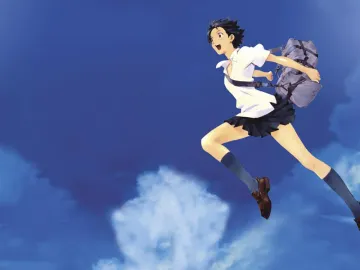
I’ll tell you some other time.
In Western culture, anime is largely known for frenetic action sequences and ridiculously powerful characters. I’ll admit, I’m not the biggest fan of fighting anime, although I’ve covered one before. But anime is a medium, and it’s used to tell all kinds of stories, including high school dramas and romances—dramatic anime tend to pique my interest far more than Super Saiyan antics. The Girl Who Leapt Through Time is a mix of teen drama, harrowing tale of personal responsibility, time travel story, and a bit of understated but very significant romance that was a joy to watch. Directed by Mamoru Hosoda (Summer Wars, Wolf Children), this is based on a popular series of novels in Japan that had seen numerous film adaptations, and this film is more of a sequel than an adaptation: the protagonist of the original series is the aunt of the protagonist in this film, and the film references her stories a bit. It’s an interesting film that does drama well and really captures the awkwardness of the teenage years in a way that even non-anime fans will probably relate to.
Please be aware that there will be some big spoilers in this review, as I think an explanation and interpretation of the film and its ending is necessary for talking about why I liked it.
The plot follows Makoto, an awkward and refreshingly average high school girl who spends most of her time outside of school hanging out with her friends Chiaki and Kosuke. She struggles to make it to class on time, struggles through some awkward social situations, and struggles to find out which direction she should be heading in her education. One day, completely by accident, she finds a solution: a newfound (and not at all understood) ability to “leap” back in time. Being an average high schooler, Makoto uses this newfound ability on relatively unimportant things: avoiding embarrassing situations, acing pop quizzes, and jumping back to the family dinner two nights ago that she liked more than tonight’s dinner. As she makes these jumps haphazardly, she begins to see that the things she’s doing to improve her life often makes life worse for others, and she starts looking at how she can fix things and not merely suit her own whims. When the nature of her time travel powers is revealed, a larger plot is revealed, and she must decide her part in it.
Sometimes all it takes to fall in love is the guts to try.
This is a movie about time travel, and a lot of the discussion I see online analyzes the technical aspects of the plot, but what I loved most about this film were the characters and dramatic elements. Makoto, in stark contrast to many anime protagonists, is a lovable mess who’s not really very good at anything, but her enthusiasm is charming. When she sets out to fix some of the things that were broken, we find out quickly (and humorously) that she’s not very good at that either. Chiaki was also a surprisingly complex character whom I’m still thinking about after watching it. The relationship between the two of them was very interesting—perhaps even more so than the time travel aspects of the plot—but Makoto’s relationships with other characters seemed natural and poignant as well. In the end, this isn’t really a time travel mystery to be solved; it’s a film that uses time travel to tell a story about a relationship. That’s what I enjoyed most, and I think that’s what was intended.
The technical aspects of the film, while not quite as amazing as Spirited Away, are still great and were a joy to experience. I watched the English dub, and all the voices were great. The animation was simple, but effective and charming in its own way. From a directorial standpoint, the film knew when to linger for some dramatic effect, and when to zip right through things—pacing was great, and I was never bored. I really enjoyed watching this film, and none of the technical aspects detracted from that.
Major spoilers ahead. You have been warned.
The Girl Who Leapt Through Time - Ending Explained
This is a film that sparked a lot of online debate as to the true meaning. Some viewers say that Chiaki was a con man, who visited Makoto’s aunt and tricked her into restoring the painting, then targeted Makoto to get her to continue the restoration. Other viewers focused on the promise Chiaki and Makoto made to each other near the end, and talked about how they had planned time travel to bring them back together, with some saying Chiaki inspired Makoto to invent time travel. Still others were convinced that Makoto and her aunt were actually the same person, and I really don’t understand that one. I don’t think any of these are what’s going on with the film; I believe it’s much simpler. So here’s my interpretation and explanation of the ending of The Girl Who Leapt Through Time.
This is a Japanese film, so there are inevitably going to be cultural references that we just don’t get here in America that didn’t require an explanation for Japanese viewers. One cultural difference that I think is key to understanding this film is the red thread of fate. Americans like to believe in fate in a way that everything is predetermined and that everything that happens was meant to happen. The Japanese version is a little more lenient. Random things happen, but the red thread of fate ties certain people together so that they’ll always be connected through fate, through space, and even time. Even in the most chaotic situations, this thread of fate allows people who are destined to be together (almost inevitably true loves) to find each other. This concept is also a big part of Your Name, another anime teen romance story on my list, and it plays a similar role: bringing these two lovers together across impossible odds, even through time, to be with each other. With that common understanding, the ending makes more sense.
In their final goodbye, Makoto is sad that Chiaki doesn’t express his feelings for her, as she had been awkwardly avoiding throughout the film. By the end, it’s pretty clear that Makoto thinks this connection is much deeper than a typical high school romance, and she’s hoping that they’re meant to be together, against all odds, even against time. When Chiaki leaves without addressing it, the statement is not only that he’s not interested, but that her hope that he was the one bound to her by this red thread of fate was false as well. In the moments leading up to that scene, Makoto came to believe that Chiaki was not just someone she loved, but could have been the person she was supposed to be tied to by fate. That’s why it’s so crushing when he walks away. So Chiaki walks away, even though he obviously likes her, and has told her such, but he’s not convinced that she’s the one he’s tied to through fate. Because how will they ever see each other again?
In coming back for her, he confesses that he too believes that they are bound together by this red thread. So when Chiaki says, “I’ll be waiting in the future,” and Makoto responds, “I’ll be right there. I’ll run there,” it wasn’t a plan; it was a hope that the red thread of fate would find a way to put them back together, even if they didn’t know what it was. It was them confessing to each other that they each had found “the one” that they were meant to be with—one of the deepest expressions of love in Japanese culture.
This goes back to my statement that this isn’t a time travel mystery—it’s a story that uses time travel to tell a love story. Whether or not this thread brings them back together isn’t implied in the movie, but it’s clear that both Makoto and Chiaki believe it’s true and will look for each other with hope.
Should I Watch The Girl Who Leapt Through Time?
So who would I recommend this film to? This is, at its heart, a teenage love story, but it’s also about growing up and learning personal responsibility, and the sci-fi elements, while not the backbone of the film, are still a very important part of the plot. If you like sci-fi and solid but understated romances, and you like teen movies, this will be right up your alley. You don’t need to be an anime “fan” to get this one, and I think I’d recommend against it if your favorite thing to watch is from the Dragon Ball series. This is a smart, poignant drama that doesn’t overstay its welcome, and has a somewhat unique plot device that moves things forward. Enjoy it for that.
Movies Like The Girl Who Leapt Through Time
- Your Name (2016) - This anime film about a high school boy and girl who occasionally switch bodies has a lot more depth and emotion than its premise makes it seem. These two students exist in different worlds—one in the city, one in the country—and have no hope of casually meeting each other. When the need arises for them to contact each other, they test the bounds of that red thread of fate, and chase each other further than they thought possible.
- 5 Centimeters per Second (2007) - This emotional anime film isn’t a time travel film, but you will feel the weight of time as love passes away and is slowly forgotten. While time is a plot device in The Girl Who Leapt Through Time, it’s the antagonist in 5 Centimeters per Second, with the characters lamenting the fading memories and waning emotions they used to feel. Another beautiful drama using the anime medium.
- Life is Strange (video game, 2015) - Yes, this is a website about movies, but the time travel teen romance plot in The Girl Who Leapt Through Time closely matches Life is Strange, which is about hipster high school students discovering love and the unexpected cost of using time travel to defy fate. It makes you feel the weight of your decisions as the consequences play out later. The learning curve is low—this game is much more about the story than the challenge. If you’re up for a different medium, give this game a try.
- Runtime: 1:38
- Director: Mamoru Hosoda
- Year: 2006
- Genres: animated, drama, romance, sci-fi, teen
- Rating: PG

About Brandon
My name is Brandon, and I love movies. Not bad ones, though—just the good ones. I’m curating and reviewing a list of classic, essential-viewing, or just plain good movies from all decades, and I've been reviewing them since 2016. I also co-host Peculiar Picture Show, a podcast about movies and mental health and write about Dungeons & Dragons options, builds, and optimization.
More in 2000s

Eternal Sunshine of the Spotless Mind: A Bittersweet Look at Love and Mental Illness
2004
drama, indie, romance

Gladiator: An Epic Political Revenge Tale
2000
action, epic, historical

The Dark Knight: A Dark Hero, a Brilliant Villain
2008
action, superhero
More in animated

Who Framed Roger Rabbit: The Wackiest Film Noir of All Time
1988
animated, comedy, film noir, mystery
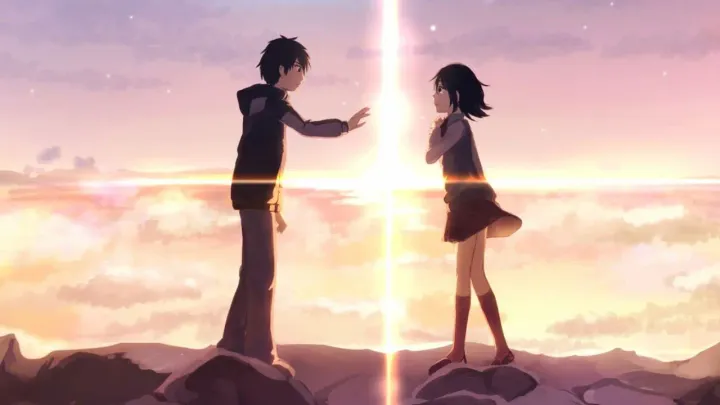
Your Name: A Refreshingly Complex Teenage Romance
2016
animated, romance, teen
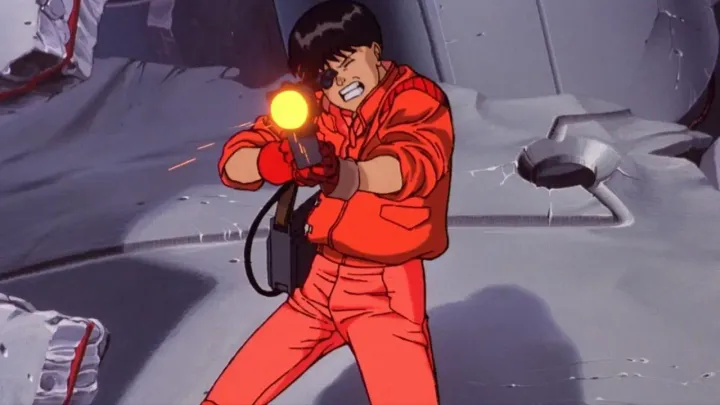
Akira: The Quintessential Anime Film
1988
animated, action, sci-fi
More in drama

Walk the Line: This Early Musical Biopic is Still One of the Best
2005
drama, music, romance

Network: Still Mad As Hell, Still Relevant
1976
drama
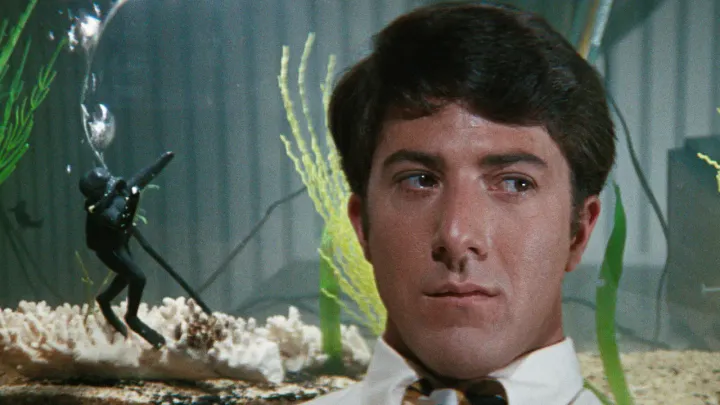
The Graduate: Choosing a Path in the 60s
1967
comedy, drama
More in romance

Breakfast at Tiffany’s: The Darkness Beneath the Glamour
1961
comedy, romance

PK: A Fun Film About Religious Harmony
2014
comedy, romance

The Philadelphia Story: Humanizing a Woman’s Drive for Perfection
1940
comedy, drama, romance
More in sci-fi

Donnie Darko: A Mind-Bending Portrait of Mental Illness
2001
indie, sci-fi, teen
Primer: The Human Cost of Time Travel
2004
sci-fi

Her: You'll Believe a Man Can Love His Phone's Operating System
2013
drama, indie, romance, sci-fi
More in teen
Say Anything: Gen-X Tells Previous Gens What They Think
1989
comedy, drama, romance, teen

The Breakfast Club: Teens United Under the Tyranny of Adults
1985
comedy, drama, teen
Donnie Darko: A Mind-Bending Portrait of Mental Illness
2001
indie, sci-fi, teen