The Magnificent Seven: The Most American Version of Seven Samurai
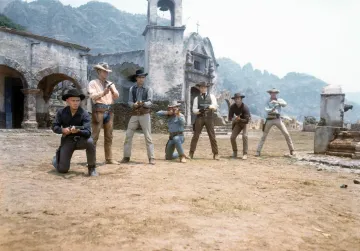
Reminds me of that fellow back home that fell off a ten story building. As he was falling, people on each floor kept hearing him say, ‘So far, so good.’
Sometimes, remakes aren’t terrible. The Magnificent Seven, a 1960 American Western directed by John Sturges (The Great Escape, Gunfight at the OK Corral), is a remake of Akira Kurosawa’s Japanese masterpiece Seven Samurai. It’s pretty much universally accepted that the original is a superior film, but this American remake is still a great movie—so much so that when Kurosawa saw the film, he sent Sturges a ceremonial Japanese sword as a gift. Today, this feels like a classic Western, but it broke enough of the classic Western customs that American audiences weren’t too crazy about it. Thankfully, it saw amazing success overseas, particularly in Europe, which would start producing hit “spaghetti Westerns” of its own just a few years later. Regardless of what style it is, this is a great Western film with excellent character development, thrilling action sequences, and an honest and hard look at the lives of the gunslingers of the Old West.
The story opens with a small Mexican village near the American border receiving a visit from a band of outlaws who regularly stops by to pillage their crops and livestock. The village has no means of defending itself, so three villagers cross the border in search of help. Seven gunslingers are willing to come protect the town for the modest sum they’re able to pay—which is, for them, everything. The Seven arrive and begin fortifying the town and training the villagers how to protect themselves. The bandit gang is never far off, and neither is the inevitable showdown.
I have been offered a lot for my work, but never everything.
One thing that initially worried me about this film was the length: just a hair over two hours. Seven Samurai was three and a half hours long, which gave plenty of time for character development and audience attachment. Honestly, the first third of this film really suffers for this. The recruiting of the seven samurai was one of the best parts of the original, but the recruitment of the seven gunslingers is rushed and, frankly, boring. Things pick up pretty quickly after the group reaches the village, and I’m happy to say that there is some solid character development and artful writing in this film. It places more priority on action than its Japanese counterpart did, but I was impressed with how well-defined the seven gunslingers were with the shorter runtime.
Of the seven gunslingers, the most well-defined were Chris, Vin, and Chico. Chris is a natural leader with a no-nonsense attitude and a lot of experience. Vin is much more laid back, and has perhaps the most experience, frequently giving out sage advice and offering sympathy for others. Chico, in contrast, is the most inexperienced of the group, but is also the most daring, and constantly has something to prove, sometimes just to himself. There’s a friendly rivalry between Chris and Vin as the two most experienced gunslingers that continued off-screen, and actors Yul Brynner and Steve McQueen carried resentment for years after the film. This didn’t hurt the film—I think it helped it. The rivalry comes through subtly in their performances and it adds a layer of depth to these two characters. Chico was at first annoying, but quickly grew on me and ended up being one of the most memorable characters in the film. The other characters had some great moments, too, but these were the standouts for me.
The gunfights and action sequences are among the best in classic-era Westerns and hold up well today. The film was more fast-paced than I thought it would be, and it held my attention. The villain Calvera is fleshed out and goes beyond the anonymous bandits in the Japanese film, and he’s not after blood—he just wants to maintain the status quo relationship, taking enough food for his men without stirring up too much trouble, and actually tries to talk the gunslingers out of a confrontation. This doesn’t stop the final showdown from happening, of course, and it is spectacular. All that to say that the action is great, but it’s more than just senseless action—the plot is intelligent and the action serves the plot rather than the other way around.
Should I Watch The Magnificent Seven?
The Magnificent Seven feels a lot more like a classic Western than the Sergio Leone films just a few years later, but it bridges that gap and sits right in-between the classic American Western and the later revisionist Westerns. It has intelligent plotting, well-defined characters, and excellent action sequences that hold up well today. If you’re looking for a great older Western to watch, or you just want to see what an American director did with Kurosawa’s Japanese masterpiece, this is well worth your time.
Movies Like The Magnificent Seven
- Seven Samurai (1954) – If you liked The Magnificent Seven, you should check out the film it’s based on. Seven Samurai moves more slowly and spends more time on character development, and it’s an excellent film—probably better than The MAgnificent Seven—that uses the same plot in a different setting.
- The Good, the Bad, and the Ugly (1966) – Italian director Sergio Leone made this Western epic with excellent tone and characters that exude vintage coolness. It breaks from the classic American Western formula even more, and does what it does extremely well.
- The Wild Bunch (1969) – This 1969 Western takes a similar concept—a group of aging gunslingers team up to take a job in a Mexican town—but turns it on its head. The gunslingers are outlaws, and the Mexican town is ruled over by a ruthless general. This is set quite a bit later—1913—as the traditional American West begins to fade away, and these aging gunslingers are seeing their way of life dissolve with it.
Academy Awards
Nominee: Best Music - Scoring of a Dramatic or Comedy Picture (Elmer Bernstein)
- Runtime: 2:08
- Director: John Sturges
- Year: 1960
- Genres: action, western
- Rating: NR

About Brandon
My name is Brandon, and I love movies. Not bad ones, though—just the good ones. I’m curating and reviewing a list of classic, essential-viewing, or just plain good movies from all decades, and I've been reviewing them since 2016. I also co-host Peculiar Picture Show, a podcast about movies and mental health and write about Dungeons & Dragons options, builds, and optimization.
More in 1960s
Midnight Cowboy: The Big City Destroys Big Dreams
1969
drama
For a Few Dollars More: Leone Gives Us Another Stylish Western
1965
western

It’s a Mad Mad Mad Mad World: The Godfather of Comedy
1963
adventure, comedy, epic
More in action
V for Vendetta: A Morality Tale About Fascism
2005
action, superhero, thriller
The Karate Kid: An 80s Underdog Story With Heart
1984
action, teen
Terminator 2: Judgment Day: A Smart Sci-Fi Action Film
1991
action, sci-fi
More in western
High Noon: A Western About Duty, Not Gunfights
1952
drama, western
Butch Cassidy and the Sundance Kid: Sunset on the Classic Western
1969
biopic, western
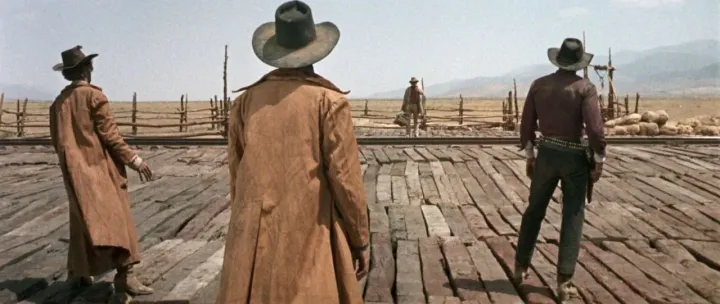
Once Upon a Time in the West: Another Amazing Spaghetti Western from Leone
1968
epic, Western